From operationalization to impactful investments: FEERM brings tangible benefits to citizens


June 17 2026, Chisinau - The Governmental Programme Residential Energy Efficiency Fund of Moldova (FEERM), managed by the National Center for Sustainable Energy (CNED), is delivering tangible results across all three financing products: the energy renovation of multi-apartment residential buildings, support for energy-vulnerable rural households, and the renovation of individual houses through the Casa Verde financing product.
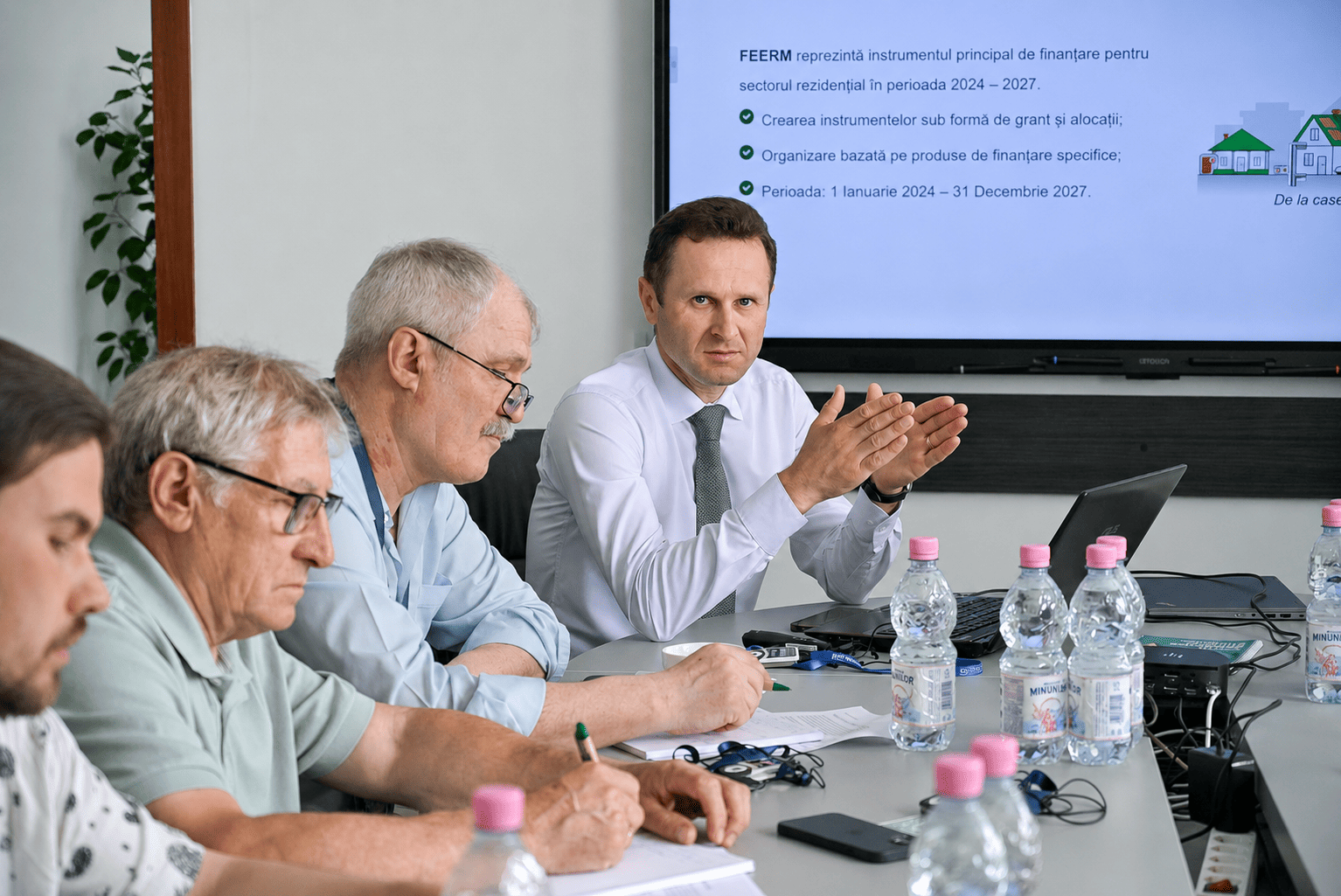
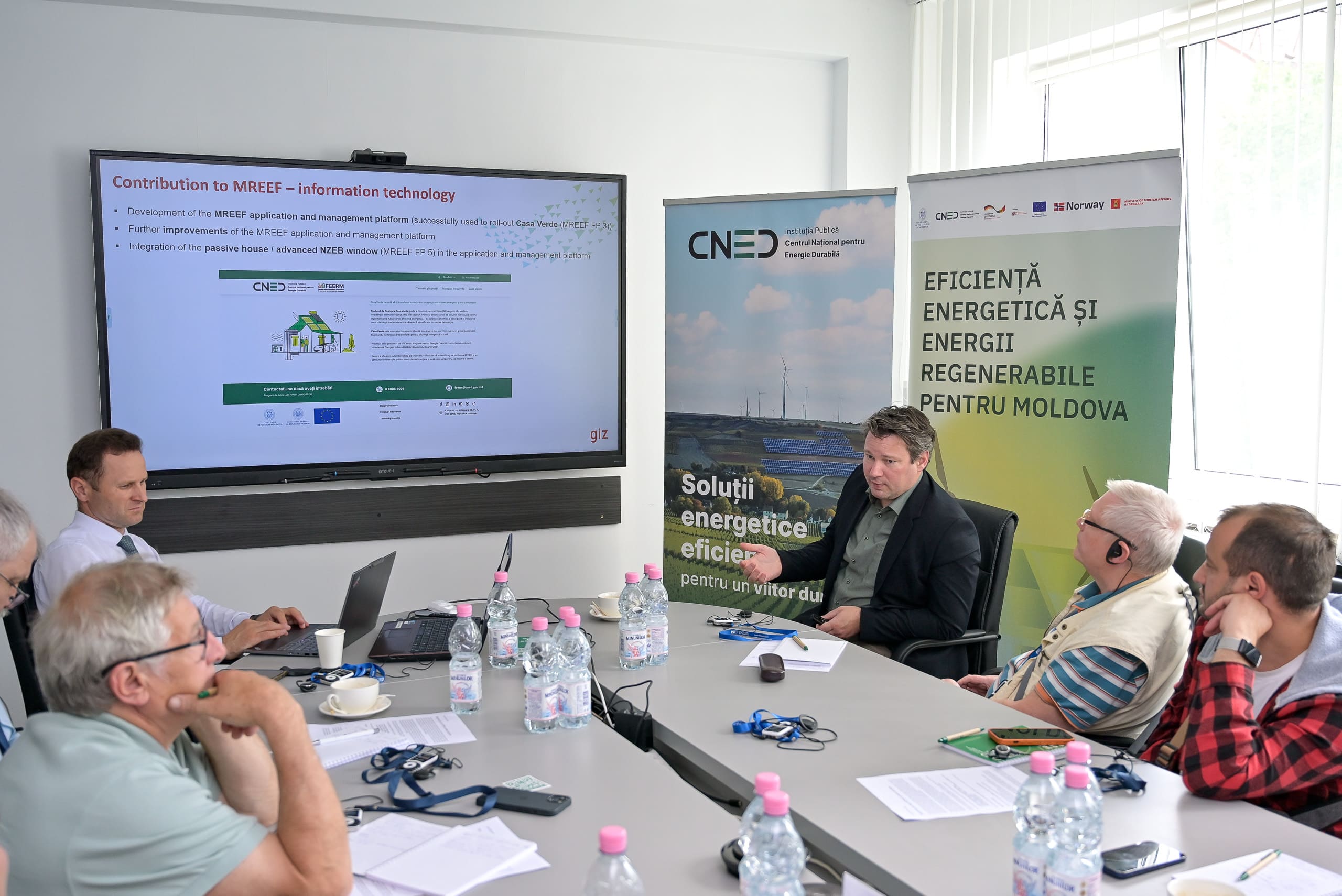
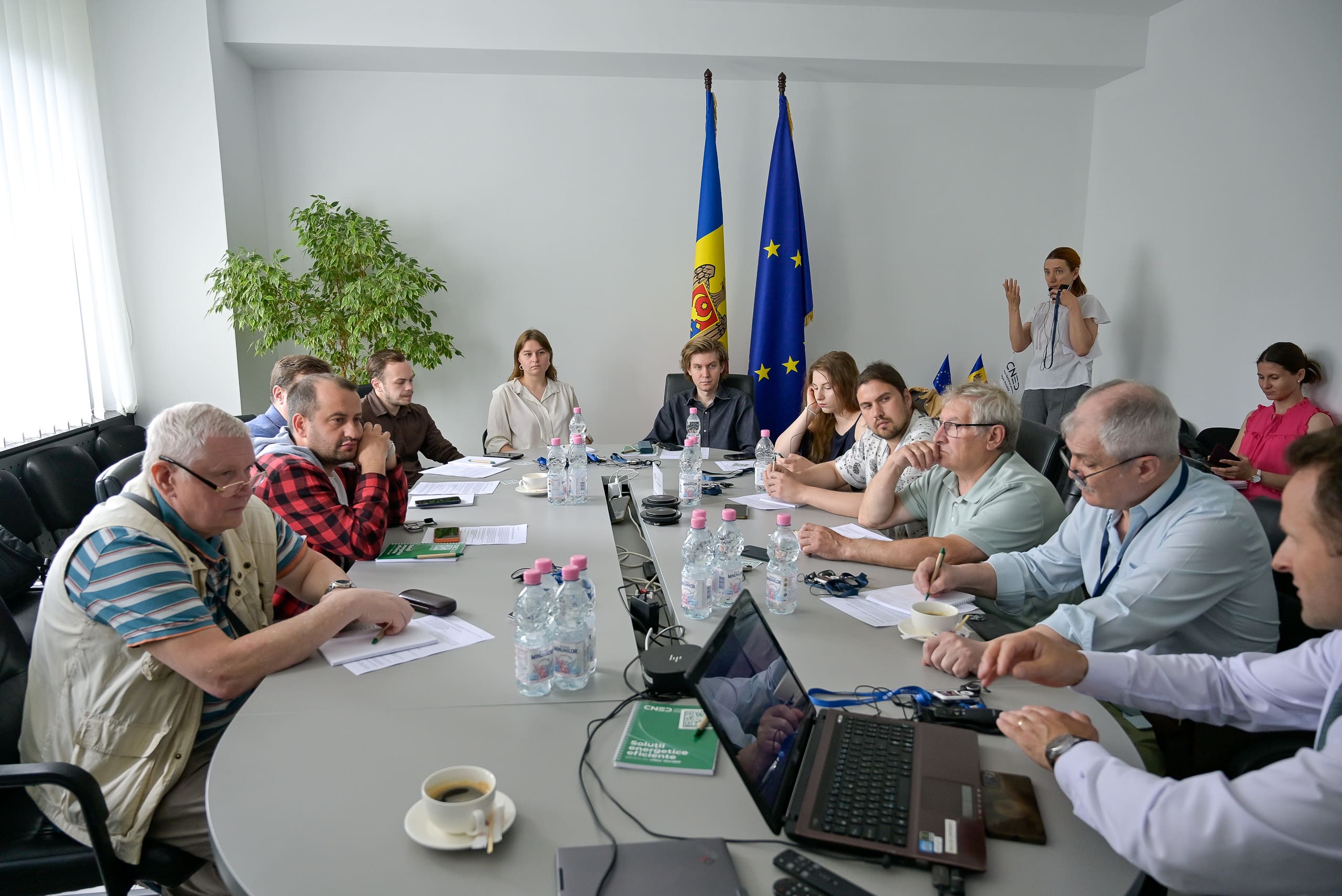
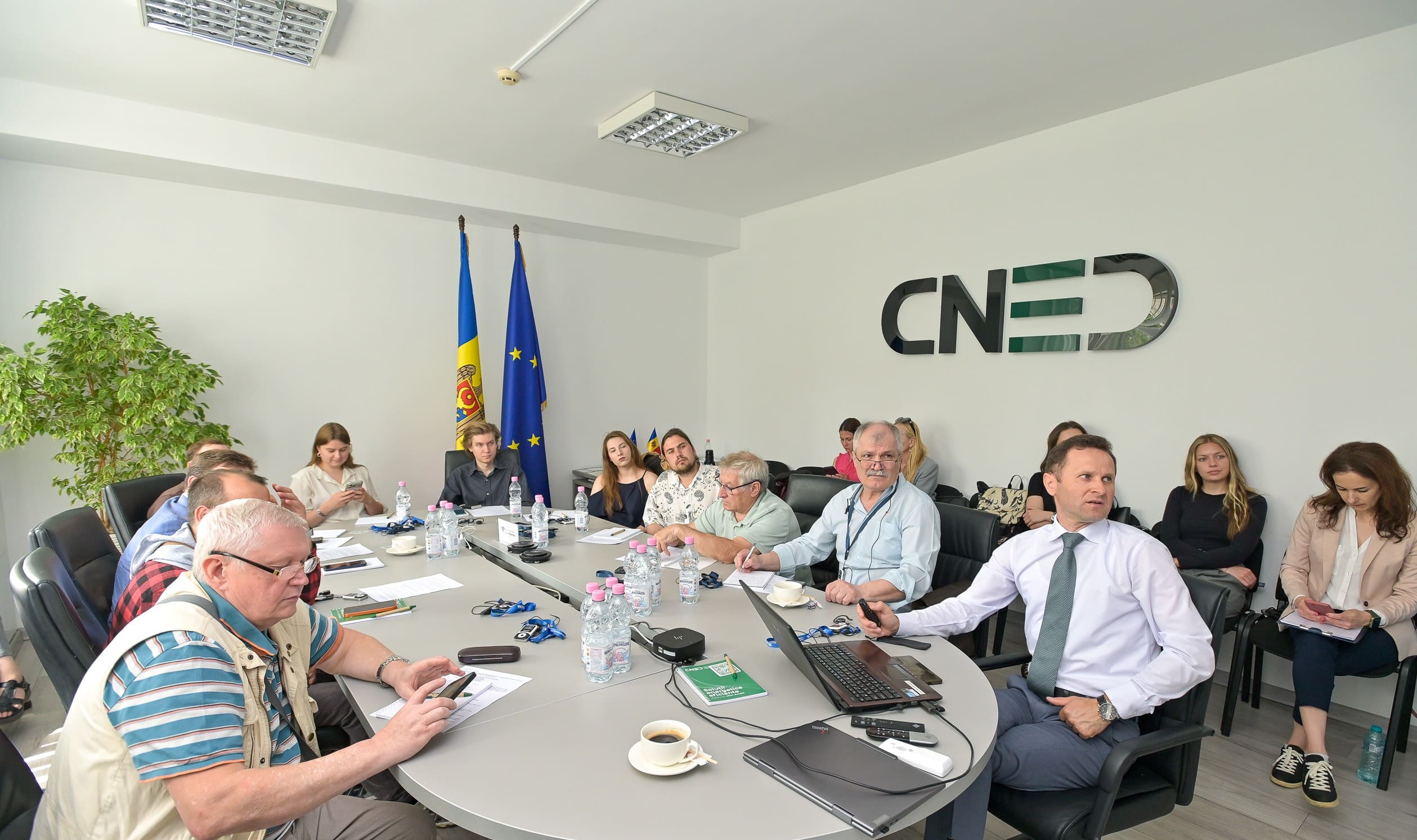
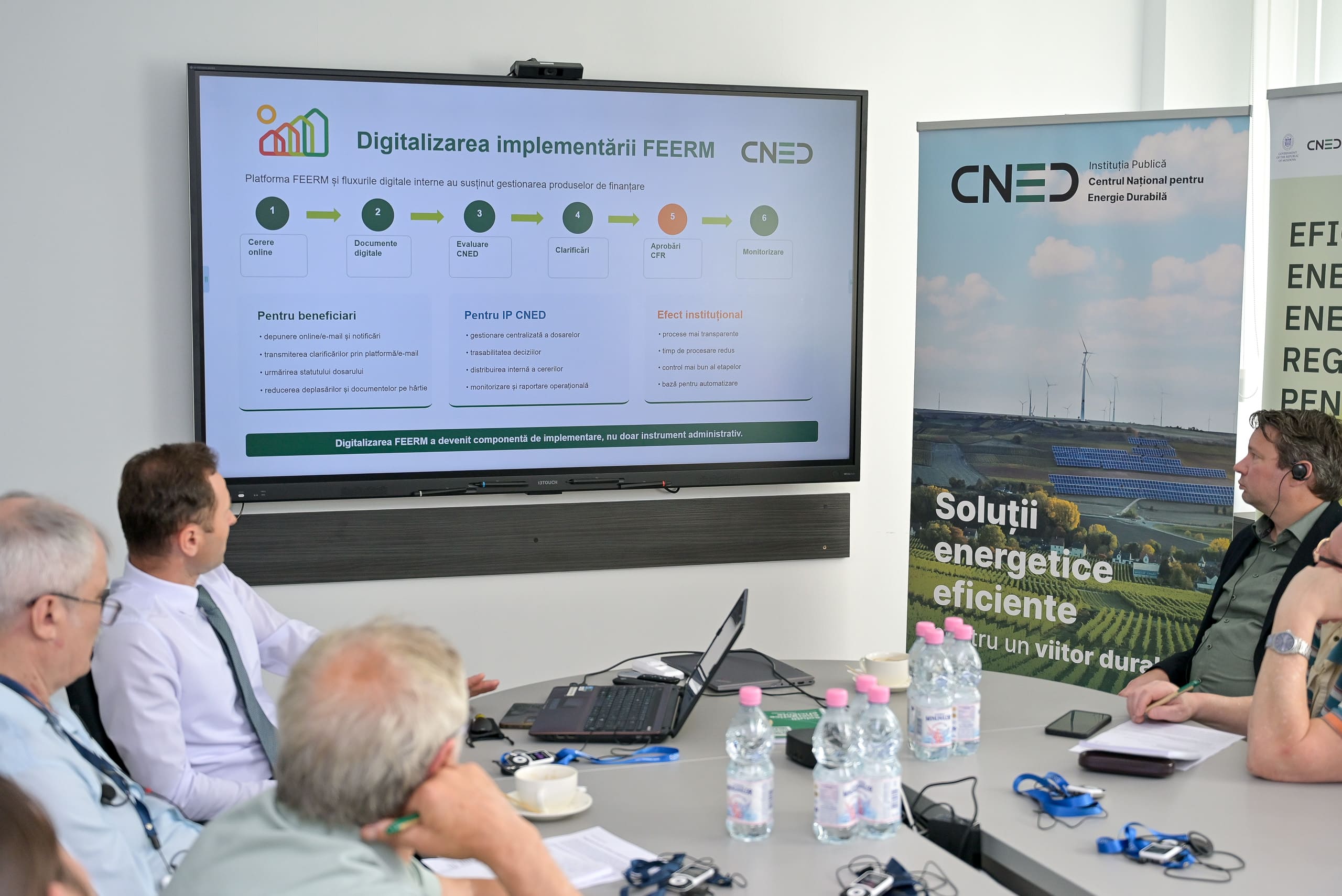
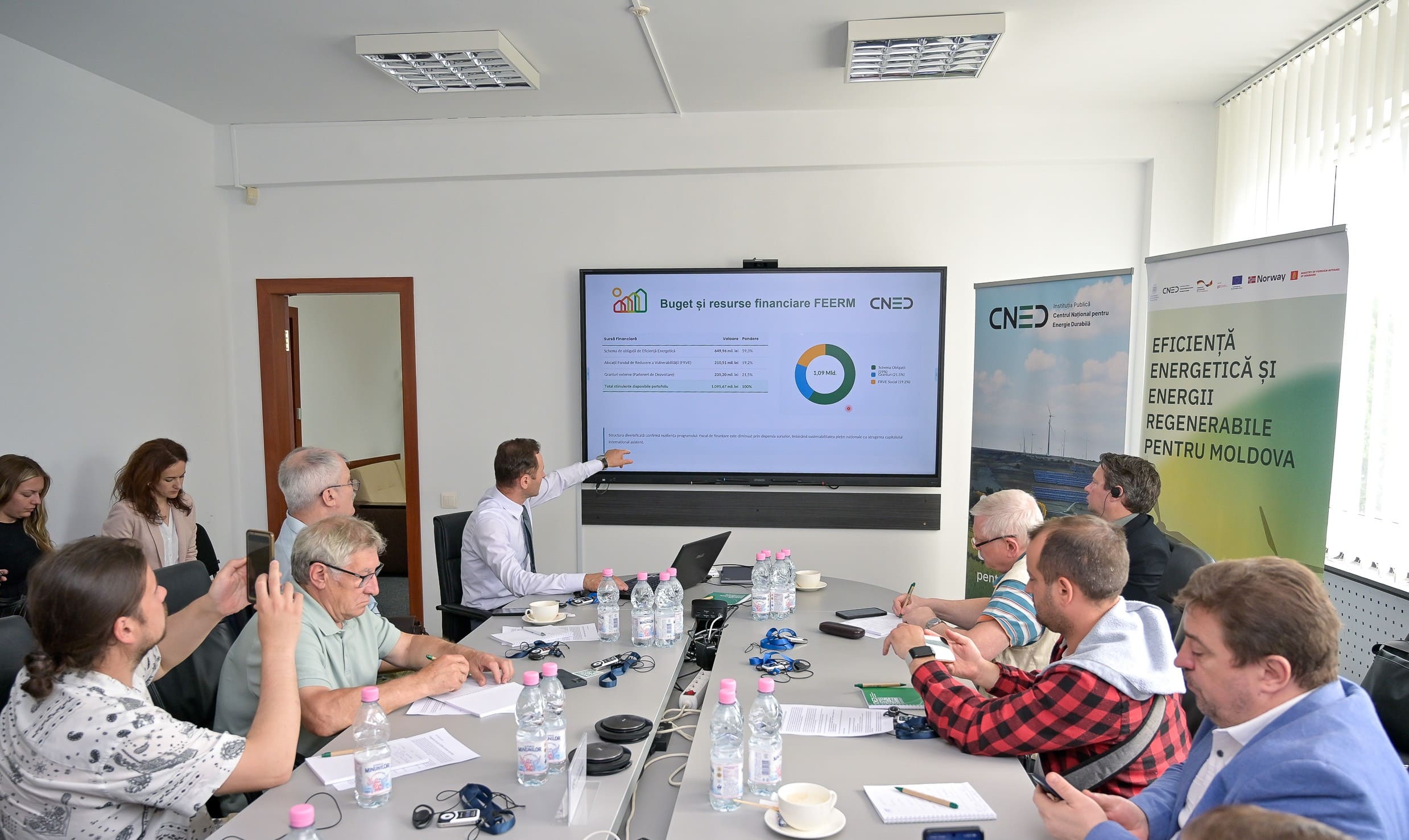
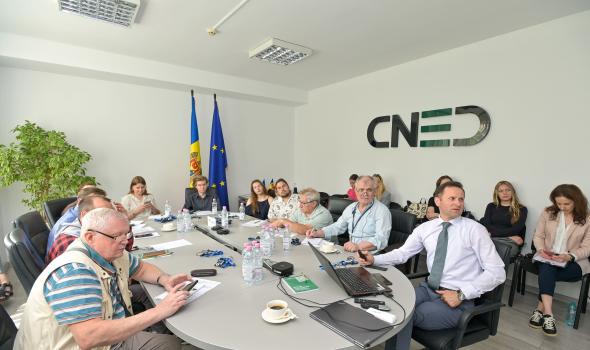
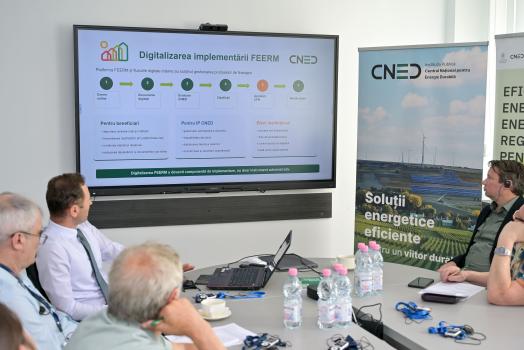
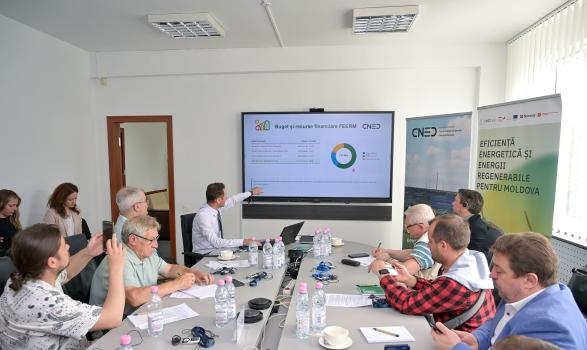
The programme’s results were presented during a Press Club event organized by the National Center for Sustainable Energy in partnership with GIZ Moldova. The event brought together representatives of development partners and the media.
“Every leu invested in energy efficiency can generate more than four lei in benefits through lower energy bills, job creation and the stimulation of local economic activity. This is the rationale behind FEERM – not temporary compensation, but structural investments with measurable long-term impacts,” said Ion Muntean, Director of CNED, while presenting the programme’s results.
Torsten Greis, Project Manager of the Energy Efficiency and Renewable Energies for Moldova (E4M) project, implemented by GIZ Moldova, highlighted the contribution of international partners to the development and implementation of the financing products offered through FEERM.
“In 2024, we began working with CNED on the development of financing products under FEERM. Since then, we have witnessed successful implementation, promoted European energy efficiency standards in the country, supported new financing instruments and, two years later, we continue working at the same pace. To ensure the programme’s sustainability, we invest in IT systems and training while also collaborating with CNED on the development of new FEERM products,” stated Torsten Greis.
Energy Efficiency of Multi-Apartment Residential Buildings: First Works Underway
The energy renovation of multi-apartment residential buildings is the most complex FEERM financing product, involving collective decision-making by homeowners, extensive technical documentation and integrated renovation works.
By the end of 2025, 98 energy audits had been completed for residential buildings across the country. A total of 77 condominium owners’ associations (COAs) entered the programme, and 17 projects were approved for financing, with a total value of MDL 74.2 million. The first four construction contracts were signed for buildings located in Chisinau and Balti, while another three are currently in the contracting stage. Construction works have already started for the contracted projects and are progressing according to schedule.
Under this financing product, condominium associations benefit from a grant covering 70% of eligible renovation costs, complemented by additional support of up to 90% through the Energy Vulnerability Reduction Fund (EVRF) for low-income residents.
Eligible measures include thermal insulation of façades and roofs, modernization of heating systems, installation of energy-efficient LED lighting in common areas, elevator modernization, and the integration of photovoltaic systems and heat pumps.
For residents, the benefits are visible: more uniform indoor temperatures with room-by-room temperature control, lower energy bills, safer common spaces and increased property value.
Energy Efficiency of Individual Rural Houses: 42 Rural Households Renovated
The financing product dedicated to rural households experiencing severe energy vulnerability achieved the highest implementation rate in 2025, with grant disbursements reaching approximately 90% of the annual budget target.
Beneficiaries for the pilot phase were identified through the Energy Vulnerability Information System (EVIS), ensuring balanced national coverage. FEERM grants cover up to 95% of renovation costs, while beneficiaries contribute only 5%, minimizing the financial burden on households with limited resources.
Out of 190 applications submitted, 163 were approved, 153 contracts were signed and 42 renovation projects have already been completed, representing a total investment of MDL 12.8 million. Beneficiaries’ homes have been transformed from energy-inefficient dwellings with significant heat losses into safe, energy-efficient and affordable homes.
The total value of approved projects amounts to MDL 51.2 million, with an average investment of approximately MDL 350,000 per household.
A second tranche aimed at renovating an additional 99 rural homes is currently under evaluation.
Casa Verde: More Than 1,700 Applications Received in the First Year
Launched in July 2025, the Casa Verde financing product targets homeowners interested in energy renovation and renewable energy solutions. Interest from beneficiaries was significant during the first two application calls.
During its first year of operation, 1,745 applications were submitted through the online platform feerm.md. Of these, 964 were approved under Component I – Energy Audit and Technical Documentation. A total of 528 applications were submitted under Component II – Construction Works, and 295 projects were approved, resulting in 275 signed financing agreements worth MDL 55 million.
Beneficiaries primarily opted for modern integrated solutions, including photovoltaic systems with energy storage and heat pumps, to enhance energy resilience and reduce long-term costs.
The average investment per household amounts to MDL 400,000, of which 50% is covered by a FEERM grant, capped at MDL 200,000.
Energy and Social Impact: Real Figures, Tangible Benefits
Beyond individual results, the programme generates broader impacts. Based on projects approved by the end of 2025, FEERM is expected to generate annual energy savings of 5.86 million kWh, equivalent to MDL 14.65 million in annual savings on energy bills and a reduction of 1,438 tonnes of CO₂ emissions. Energy consumption reductions can reach up to 69% per household.
The programme also contributes to local economic development. FEERM stimulates demand for insulation materials, energy-efficient equipment and renewable energy technologies, supports the development of energy auditing and design services, and creates skilled jobs ranging from installers and designers to energy auditors and technical supervisors.
In 2025, 35 eligible energy auditors were identified and dozens of construction companies were registered under the programme, laying the foundation for a dedicated residential renovation services market.
The year 2026 marks the transition from operationalization to intensive investment implementation. CNED has set clear targets: renovating at least 8 residential buildings, completing works in approximately 160 vulnerable households, financing more than 1,000 households through Casa Verde, and launching at least two national calls under this financing product.
In the medium term, the programme aims to renovate at least 500,000 square metres of heated floor area, generating estimated annual energy savings of 66.3 GWh, while ensuring that at least half of all beneficiaries are energy-vulnerable households.
FEERM’s progress has not been without challenges. The main obstacle has been the limited capacity of the local technical market. A shortage of specialized designers, certified energy auditors and experienced construction companies led to repeated procurement procedures and implementation delays.
In the multi-apartment building segment, challenges were of a different nature. Decisions regarding building renovation must be taken collectively by all homeowners, requiring general meetings and lengthy negotiations. This was compounded by the difficulty some design companies faced in managing complex and highly customized technical solutions. Nevertheless, once these challenges were addressed, projects advanced, and the first construction contracts entered the implementation phase.
Based on the lessons learned, CNED has developed a 2026 action plan structured around five key areas: standardization and development of practical tools, digitalization and automation of workflows, development of the energy efficiency market, acceleration of implementation, and improved communication tailored to beneficiaries’ needs.
In addition, to facilitate access to financing for condominium associations, CNED is developing a loan guarantee and compensation mechanism that will enable associations to access bank loans to cover residents’ co-financing contributions. The mechanism is expected to become operational by autumn 2026.
The Residential Energy Efficiency Fund of Moldova (FEERM) is a national programme with a budget of MDL 1.4 billion dedicated to financing residential energy renovation projects throughout the Republic of Moldova. The programme supports both multi-apartment buildings and individual households, aiming to improve energy efficiency and reduce carbon emissions in the energy sector.
Images